Green hydrogen has moved from pilot project to procurement priority faster than most industrial suppliers anticipated. As electrolyser capacity scales globally and hydrogen pipeline infrastructure takes shape across Europe, Japan, and the Middle East, the demand for precision instrumentation components — including manifold valve assemblies — has risen sharply, and Indian manufacturers are increasingly meeting it.
Here’s why Indian valve manufacturing is a credible and growing part of this supply chain, and what clean energy project engineers should know when evaluating sources.
Why Does Clean Energy Infrastructure Depend on Manifold Valves?
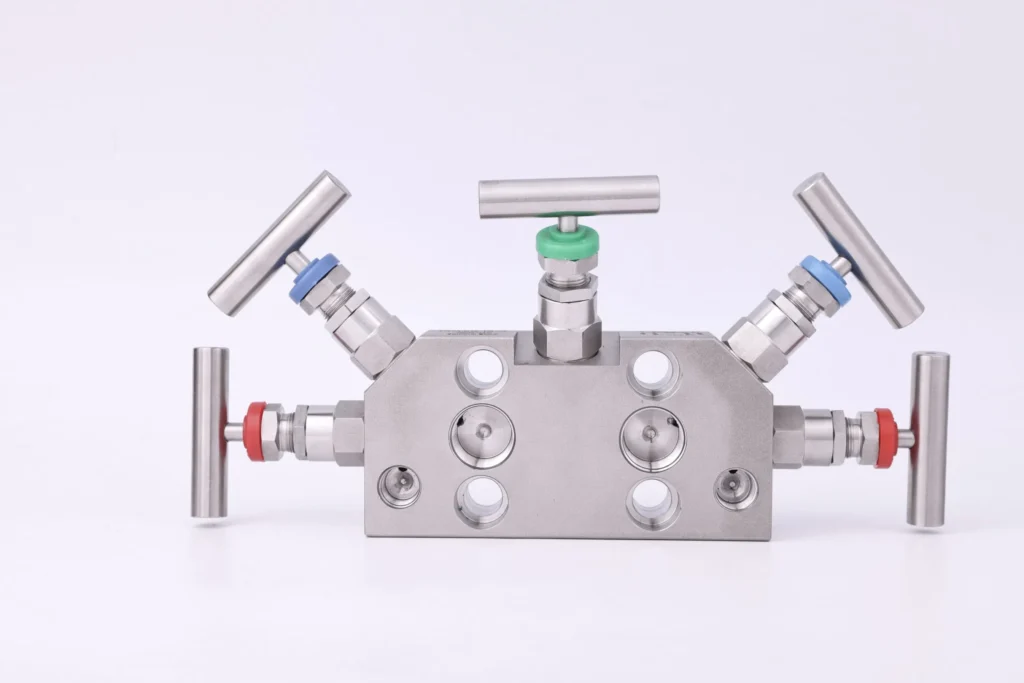
Hydrogen and clean energy systems require precise, leak-free pressure and flow measurement at every critical point — electrolysers, compression stations, storage vessels, and distribution lines. A manifold valve manufacturer supplies the instrumentation manifold assemblies that connect pressure transmitters, differential pressure gauges, and safety instruments to these process lines.
In hydrogen service specifically, this matters more than in conventional hydrocarbon applications. Hydrogen’s low molecular weight makes it prone to permeation through standard seals. A poorly specified manifold with inadequate seat materials or insufficient pressure rating doesn’t just cause measurement error — it creates a genuine safety and project liability risk.
What Has Changed in Global Clean Energy Procurement?
Three shifts have changed where project engineers source instrumentation components:
Supply chain diversification. Post-2020, engineering, procurement, and construction (EPC) contractors across Europe and the Middle East moved deliberately away from single-country sourcing. India became a preferred alternative for precision-machined instrumentation components — not as a cost play, but as a resilience play.
Quality standard alignment. Indian manifold valve manufacturers capable of producing to ASME, PED (Pressure Equipment Directive), and ATEX-compatible requirements have become directly qualified for European clean energy projects. Where this certification gap existed five years ago, it has narrowed significantly.
Hydrogen-specific material requirements. Hydrogen embrittlement of carbon steel at high pressures is a well-documented failure mode. Project specifications increasingly call for SS 316L or duplex stainless steel manifold bodies with PTFE or PEEK seats — material combinations that established Indian instrumentation manufacturers already produce for oil, gas, and petrochemical clients domestically.
What Makes an Indian Manifold Valve Manufacturer Credible for Hydrogen Projects?
Not every instrumentation supplier is positioned for clean energy supply chains. The markers that distinguish those that are:
- Documented pressure ratings. Hydrogen compression and storage applications commonly operate above 3,000 PSI. A manufacturer with tested, certified ratings up to 6,000 PSI has headroom; one without pressure test documentation doesn’t belong in this application.
- Material traceability. Clean energy EPCs increasingly require full material traceability — mill certificates, heat numbers, and third-party material verification. This is standard practice for established instrumentation manufacturers; it’s a gap for traders reselling imported components without documentation.
- Named standards compliance. ASME B16.34, API 6D, and PED 2014/68/EU are the standards that appear in hydrogen project specifications. “Compliant with international standards” — a phrase that appears on many supplier websites — is not the same thing.
- In-house testing capability. Hydrostatic and pneumatic pressure testing, seat leakage testing, and material hardness verification conducted in-house, rather than outsourced, is the baseline for hydrogen project qualification.
Quick Reference: Manifold Valve Requirements for Hydrogen vs. Conventional Service
| Requirement | Conventional Service | Hydrogen Service |
| Body Material | SS 316, CS, SS 304 | SS 316L, Duplex preferred |
| Pressure Rating | Up to 6,000 PSI | 3,000–10,000 PSI depending on stage |
| Seat Material | PTFE standard | PTFE or PEEK, verified for H2 compatibility |
| Material Traceability | Good practice | Project requirement |
| Standards Documentation | Recommended | Mandatory for EPC qualification |
FAQs
1. Are Indian manifold valve manufacturers certified for hydrogen applications?
Established manufacturers already producing to ASME, PED, and API standards are the relevant pool — certification is to the standard, not to the fluid. The question to ask any supplier is whether their materials, pressure ratings, and test documentation meet the project specification, not whether they have a “hydrogen certificate.”
2. What valve configurations are used in hydrogen instrumentation?
3-valve and 5-valve manifolds are most common — 3-valve for pressure and DP measurement on gas service, 5-valve where full venting of both sides is required before instrument removal, which is standard practice on compressed hydrogen lines.
3. How do I verify an Indian supplier’s manufacturing credentials for a clean energy project?
Request mill certificates with heat numbers, a current hydrostatic test report for the specific product, and documentation of the named standards they manufacture to. A credible manifold valve manufacturer will provide these without hesitation.
Metalok Industries manufactures instrumentation manifold valves in SS 316, SS 304, and carbon steel, rated up to 6,000 PSI, with full pressure test documentation available per order. View our manifold valve range →