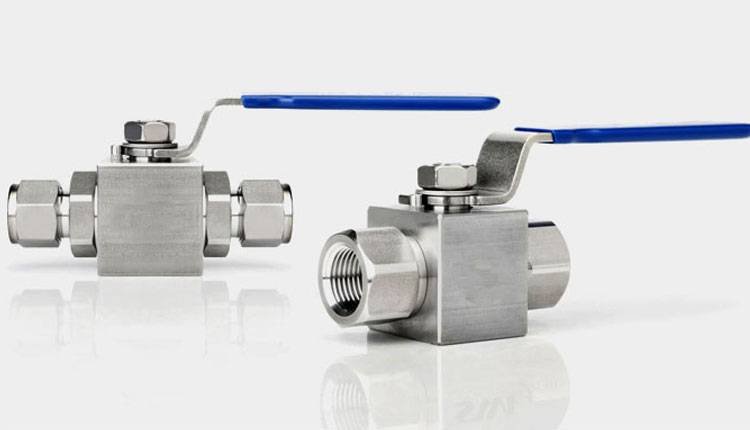
Ball valves are widely used for shut-off and isolation in industrial piping and process systems. However, not all ball valves use the same internal design.
Two common configurations are floating ball valves and trunnion-mounted ball valves. Although both use a spherical ball to control flow, their construction and operating characteristics differ.
Understanding these differences helps engineers select the appropriate valve for pressure, size, flow and application requirements.
What Is a Floating Ball Valve?
In a floating ball valve, the ball is not mechanically fixed to a trunnion at the bottom. Instead, the ball is supported by the valve seats and can move slightly under pressure.
When the valve is closed, upstream pressure pushes the ball toward the downstream seat. This creates the sealing force required to isolate the flow.
Floating ball valves are commonly used in small- to medium-sized applications where their compact design and relatively simple construction are suitable.
What Is a Trunnion-Mounted Ball Valve?
A trunnion-mounted ball valve uses additional mechanical support to hold the ball in position. The ball is supported by a fixed shaft or trunnion arrangement.
Because the ball is mechanically supported, the operating torque can be reduced, particularly in larger valves and higher-pressure applications.
Trunnion-mounted designs are therefore frequently considered for demanding industrial process systems.
Floating vs Trunnion Ball Valves
The main differences relate to ball support, operating torque, pressure requirements and valve size.
Ball Support
A floating ball is supported primarily by the valve seats and can move under pressure.
A trunnion-mounted ball remains mechanically supported within the valve body.
Operating Torque
Floating designs may require greater torque as valve size and pressure increase because process pressure contributes to the force acting on the ball.
Trunnion-mounted designs can reduce operating torque through their supported-ball arrangement.
Valve Size
Floating ball valves are commonly used across smaller and medium valve sizes, depending on the design and application.
Trunnion-mounted configurations are often selected for larger-diameter pipelines and demanding process systems.
Pressure Applications
Both designs can be engineered for industrial pressure applications. However, trunnion-mounted construction is commonly considered where larger valve sizes and higher operating loads create greater mechanical demands.
Where Are Floating Ball Valves Used?
Floating ball valves may be suitable for:
- General industrial piping
- Water systems
- Gas systems
- Chemical processing
- Instrumentation
- Utility services
- Process isolation
- Small- and medium-diameter pipelines
Their relatively straightforward construction can make them practical for many general shut-off applications.
Where Are Trunnion-Mounted Ball Valves Used?
Trunnion-mounted ball valves are often considered for applications involving larger pipelines or demanding operating conditions.
Typical applications can include:
- Oil and gas pipelines
- Petrochemical facilities
- Natural gas systems
- High-pressure process lines
- Large-diameter piping
- Gas transmission systems
- Industrial process plants
The final selection depends on pressure, temperature, fluid characteristics, pipeline size and applicable standards.
How Should You Select Between the Two?
When choosing between floating and trunnion-mounted construction, consider:
Pipeline size: Larger pipelines may require a design that manages operating torque effectively.
Pressure: Confirm the required pressure class and valve rating.
Temperature: Check body, seat and sealing material compatibility.
Fluid: Consider whether the medium is corrosive, abrasive, toxic or flammable.
Operating frequency: Automated or frequently operated valves may require particular attention to torque and actuator compatibility.
Maintenance: Consider accessibility, service requirements and the manufacturer’s maintenance recommendations.
Why Manufacturer Selection Matters
Valve design is only one part of procurement. Manufacturing quality, material traceability, testing and documentation can affect the valve’s suitability for industrial service.
An experienced ball valve manufacturer can help determine the appropriate construction based on valve size, pressure class, operating conditions and process requirements.
Conclusion
Floating and trunnion-mounted ball valves both provide effective flow isolation, but their construction makes them suitable for different operating requirements.
Floating ball valves can be practical for many general industrial and smaller-diameter applications, while trunnion-mounted designs are commonly considered for larger valves and demanding process conditions.
The correct choice should always be based on the complete system specification rather than valve design alone.