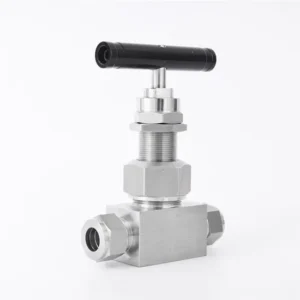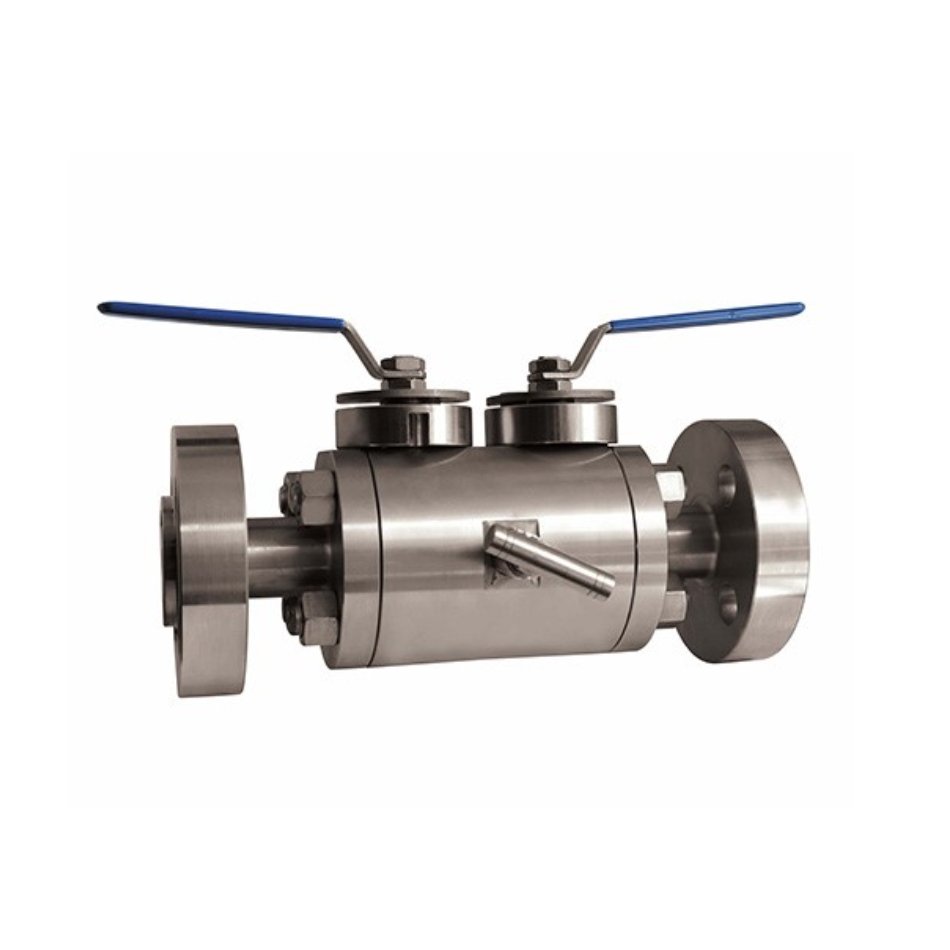
Isolation is an important part of maintaining safety and controlling process equipment in industrial systems. When equipment needs to be inspected, maintained or removed from service, the ability to isolate pressure and safely release trapped fluid can be essential.
Block and bleed valves combine isolation and pressure-release functions within a valve arrangement. They are used across process industries where controlled isolation is required.
What Is a Block and Bleed Valve?
A block and bleed arrangement typically uses one or more isolation valves along with a bleed or vent valve.
The block valve isolates the process flow. The bleed valve provides a controlled route for releasing or monitoring pressure in the isolated section.
Depending on the system design, a block and bleed configuration may be implemented using separate valves or an integrated valve assembly.
How Does Block and Bleed Isolation Work?
The operating principle is relatively straightforward.
First, the block valve is closed to isolate the downstream or upstream section of the process.
The bleed connection can then be used to release trapped pressure or confirm whether isolation has been achieved.
This arrangement can provide operators with greater control when working on isolated equipment.
Why Is Block and Bleed Isolation Used?
Pressure Release
A bleed function can provide a controlled method for releasing pressure trapped between isolation points.
Isolation Verification
The bleed section can assist operators in checking whether pressure remains in the isolated section.
Maintenance Support
Controlled isolation can help create appropriate conditions for inspection or maintenance, subject to the site’s safety procedures.
Reduced Installation Complexity
Integrated arrangements can combine multiple functions into a compact assembly, depending on the valve design.
Where Are Block and Bleed Valves Used?
Block and bleed arrangements can be found in applications such as:
- Oil and gas processing
- Petrochemical plants
- Refineries
- Chemical processing
- Natural gas systems
- Process instrumentation
- Pressure measurement systems
- Pipeline applications
They may be used around instruments, process equipment, pipelines and other points where isolation and pressure management are required.
Single Block and Bleed vs Double Block and Bleed
These terms should not be treated as interchangeable.
A single block and bleed arrangement generally uses one primary isolation point with a bleed function.
A double block and bleed arrangement provides two isolation barriers with a bleed point between them.
The appropriate configuration depends on the process, risk assessment, applicable standards and project requirements.
What Should You Consider Before Selecting a Block and Bleed Valve?
Several factors should be evaluated before procurement.
Process Fluid
Understand the chemical and physical characteristics of the fluid.
Pressure and Temperature
Confirm that the valve assembly is suitable for the maximum operating pressure and temperature.
Material Compatibility
The body, trim, seals and other wetted components should be compatible with the process medium.
Connection Configuration
Consider threaded, flanged or other connection requirements according to the piping system.
Space Requirements
Compact integrated arrangements may be useful where installation space is limited.
Applicable Standards
Industrial projects may have specific design, testing and documentation requirements.
Selecting a Block and Bleed Valve Manufacturer
Manufacturer selection should consider product configuration, material options, pressure ratings, testing procedures and technical documentation.
An experienced block and bleed valve manufacturer can help specify the appropriate arrangement based on the process conditions, isolation requirements and installation configuration.
Conclusion
Block and bleed arrangements provide a controlled approach to process isolation and pressure management. They are particularly useful in applications where equipment or instrumentation needs to be isolated while allowing trapped pressure to be released or monitored.
The correct configuration depends on the process conditions, required isolation level, valve materials, pressure, temperature and applicable safety requirements.